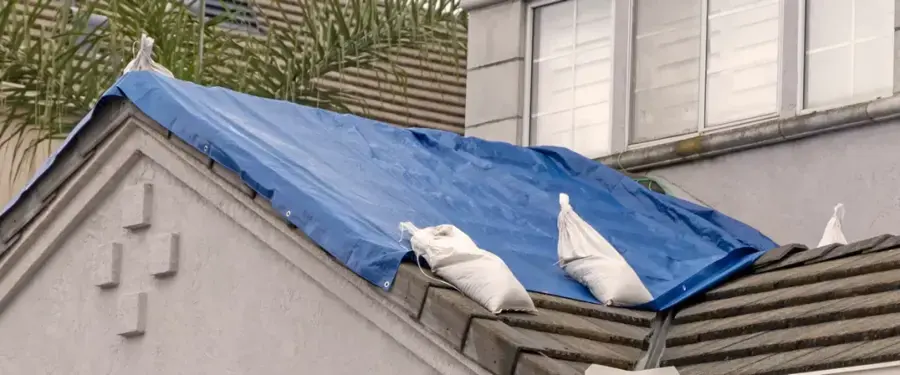
An EF-1 tornado hit Largo in June 2025, and Largo Fire Rescue estimated that 40 to 50 homes were damaged in Ranchero Village and 10 to 15 in Bay Ranch, with no injuries reported. When wind opens a roof, much of the damage that follows comes from the rain that gets in afterward.
Key takeaways
- Largo Fire Rescue estimated 40 to 50 damaged homes in Ranchero Village and 10 to 15 in Bay Ranch after the June 2025 EF-1 tornado, with no injuries reported.
- Water that enters through a wind-opened roof soaks insulation, ceilings and framing long before it shows as a stain.
- A tarp or cover, photos and a plan for the wet ceiling come first, and dry-out starts as soon as the area is safe.
- The City of Largo says it will keep requiring permits for reroofing regardless of value.
- Florida House Bill 803 (2026) excludes electrical, plumbing, structural, mechanical and gas work from its $7,500 permit exemption, according to the city.
What the June 2025 tornado did in Largo
In June 2025 an EF-1 tornado hit Largo. Largo Fire Rescue estimated that 40 to 50 homes were damaged in Ranchero Village and 10 to 15 in Bay Ranch, and no injuries were reported.
Wind damage to a roof often looks small from the ground. A few lifted shingles or a gap at a ridge can still let a heavy rain pour into the attic.
How rain gets in after wind damage
Rain follows the easiest path, and that path is rarely straight down.
Through the roof deck
Wind lifts shingles or tile, tears flashing and can open gaps in the decking. Rain then runs under the covering and soaks the sheathing and the attic insulation.
Along the framing
Water follows rafters and trusses, so the stain may appear far from the opening. A small interior stain can point to a much larger wet area above.
Into the ceiling
Insulation holds the water against the drywall until the ceiling stains, bubbles or sags. A ceiling that holds water is heavy and can come down.
Different homes, different paths for the water
Largo's housing is a mix, and roof damage plays out differently in each type.
Single-family homes
About 27.7% of Largo housing units, an estimated 13,942, are single-family detached homes. Water usually enters through the roof deck, runs through the attic and appears as a stain on a ceiling below.
Apartments and condos
About 29.6% of units, an estimated 14,903, are in buildings with five or more units. A roof opening over the top floor wets the top units first, and water can travel down through shared walls to the units below.
Mobile and manufactured homes
About 28.0% of units, an estimated 14,131, are mobile homes. A roof opening on a manufactured home can send water into the roof cavity and down into the walls and floor, where insulation can hold it.
First steps: stop the rain, protect the house, photograph
The first priority is keeping more rain out. Climbing onto a storm-damaged roof is dangerous, so covering the opening is a job for a roofer.
Roof leak water damage in Largo starts with that cover and with a record of what the roof looked like. The same steps apply to any storm-opened roof across Seminole and Pinellas County, as with roof leak water damage in Seminole.
- Photograph roof damage from the ground and every interior stain with the date visible.
- Place buckets under drips and move furniture and electronics out of the way.
- Turn off ceiling lights and fans under a wet area.
- Stay clear of ceilings that bulge or sag.
- Keep receipts for tarps, covers and emergency repairs.
What a wet ceiling and attic need
Water from overhead is usually a Class 3 loss under the IICRC S500 standard, because ceilings, insulation and wall cavities take on water quickly. Saturated drywall and wet insulation come out, and the framing is dried.
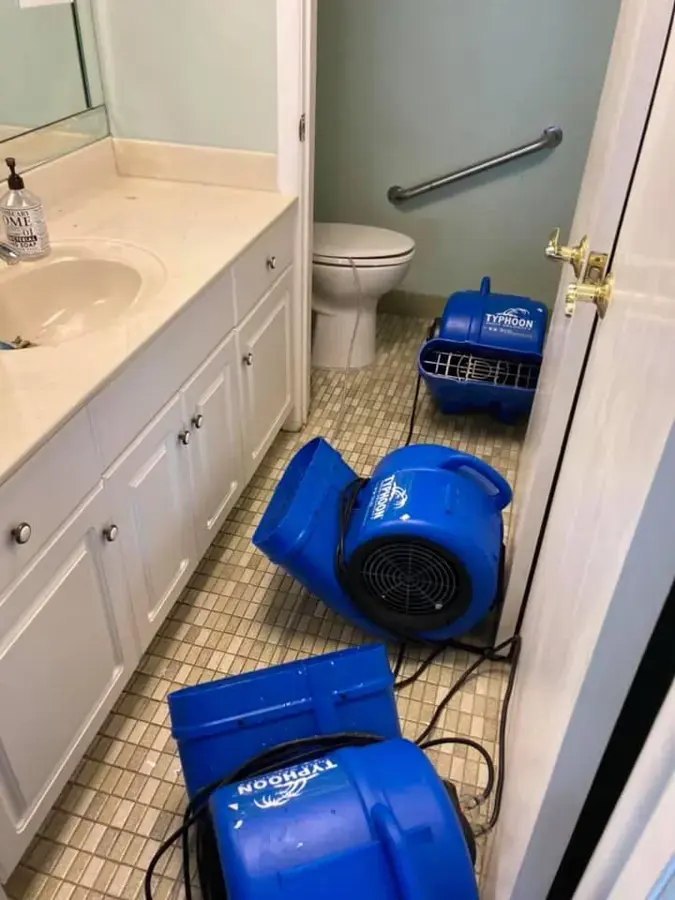
Ceiling leak water damage in Largo is handled by opening the ceiling where water is trapped, drying the cavity with air movers and dehumidifiers and logging readings every day.
- Insulation that has soaked is removed because it holds water against the framing.
- Drywall that is sagging, stained through or soft is cut out.
- Attic framing and decking are dried until readings match an unaffected area.
- Damp materials can start growing mold within 24 to 48 hours, so the dry-out should not wait for the roof repair to finish.
How the roof repair and the dry-out fit together
A roof repair and a dry-out are separate jobs that overlap. The order that works best is covering the opening first, then removing what cannot dry, then drying, and finally the permanent roof work.
- Cover: a roofer closes the opening with a tarp or temporary cover to stop new water.
- Remove: wet insulation and saturated ceiling drywall come out.
- Dry: air movers and dehumidifiers run until the readings reach the dry goal.
- Repair: the reroof is permitted and completed, then ceilings and paint are restored.
Permits for roof repairs in Largo
The City of Largo says it will keep requiring permits for window replacement, exterior door replacement, reroofing, wood decks and sheds regardless of value. A reroof after wind damage is on that list.
Under Florida House Bill 803 (2026), the permit exemption for certain single-family work valued at $7,500 or less excludes electrical, plumbing, structural, mechanical and gas work and does not apply in Special Flood Hazard Areas, according to the city.
Rain, timing and records
A roof that stays open lets in water every time it rains, and the June to September rainy season brings regular storms. Each rain adds to what has to come out.
For a sense of scale, the City of Largo, citing the National Weather Service, said Tampa Bay area rainfall reached a record 17.78 inches in August 2024.
A roofer's written findings, dated photos and the daily moisture log give the insurer the full sequence: wind opened the roof, rain got in and drying brought the structure back to the dry goal.
Water that enters through a storm-damaged roof is a different kind of loss from rising flood water, and the policy wording decides how each is covered. For help in the area, see water damage restoration in Largo.
Questions
How many homes did the June 2025 Largo tornado damage?
Largo Fire Rescue estimated 40 to 50 damaged homes in Ranchero Village and 10 to 15 in Bay Ranch. No injuries were reported.
Does reroofing in Largo need a permit?
The City of Largo says it will keep requiring permits for reroofing regardless of value.
Can a wet ceiling be saved?
A ceiling caught early after clean rain water can sometimes be dried in place. Drywall that is saturated, soft or sagging is removed.
What does House Bill 803 change for repairs?
Under Florida House Bill 803 (2026), the permit exemption for certain single-family work valued at $7,500 or less excludes electrical, plumbing, structural, mechanical and gas work, and it does not apply in Special Flood Hazard Areas, according to the City of Largo.
Is rain through a damaged roof a flood loss?
No. Water that enters through a roof opened by wind is a roof leak, while flood loss refers to rising water from outside. The policy wording decides how each is covered.
What should be photographed after wind damage to a roof?
The roof from the ground, every interior stain, wet insulation and any damaged belongings, with the date showing in the photos. A roofer's written findings add to that record.
Can drying start before the roof is repaired?
Yes, once the opening is covered. Waiting for the permanent repair lets wet materials stay damp, and a cover keeps new rain from undoing the drying.
What happens to wet attic insulation?
Insulation that has soaked is removed and replaced, because it holds water against the framing and does not dry reliably in place.