Structural Drying and Dehumidification in Seminole, FL
Getting water off the floor is only the start. The drying team dries the slab, the framing and the wall cavities to measured readings, with dehumidifiers sized for Seminole's humid air, 24/7.
(888) 621-2041Need it dried right? Call Seminole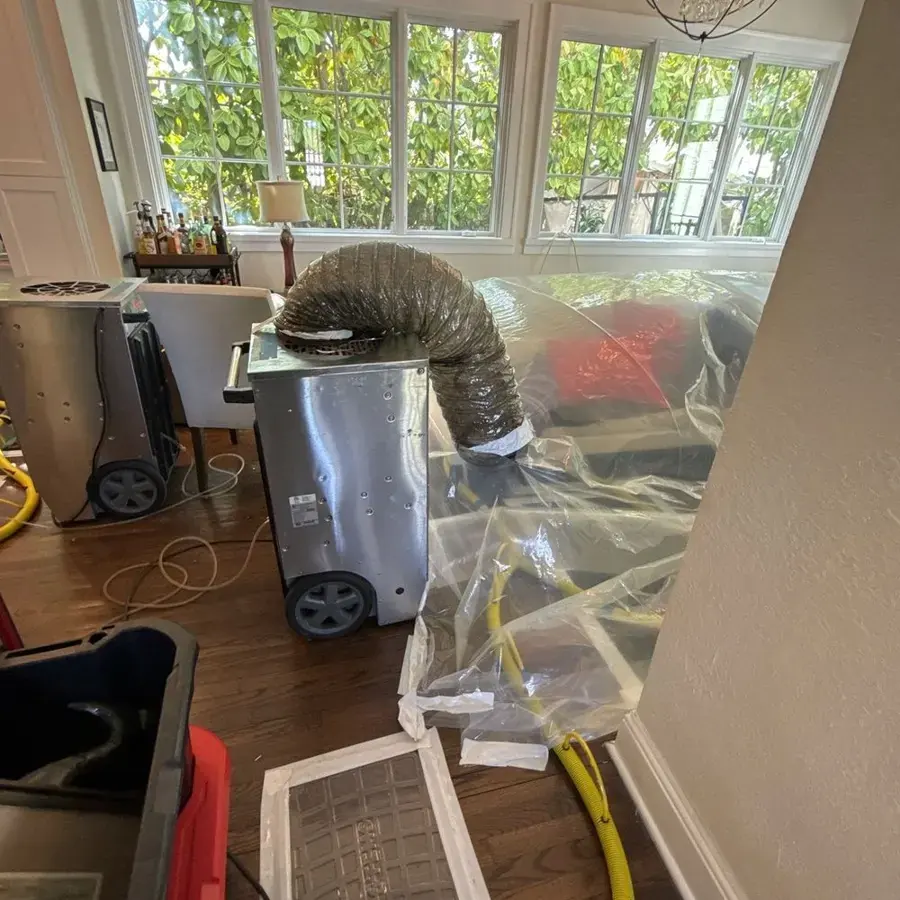
Step by step: structural drying in Seminole, FL
Map moisture
Meters and thermal imaging map every wet material.
Set the equipment
Air movers and dehumidifiers are sized to the class of loss.
Monitor daily
Psychrometric readings track progress and the equipment is adjusted.
Verify dry
Readings reach the dry goal before the equipment comes out.
First moves for structural drying in Seminole
- Remove standing water first
Extraction comes before drying equipment goes down.
- Keep windows closed
Humid outside air slows drying in Seminole.
- Run the AC if it is safe
Air conditioning helps pull moisture from the air.
- Leave equipment running
Air movers and dehumidifiers work around the clock.
- Let readings decide
Equipment comes out when the materials reach the dry goal.
What does structural drying cost in Seminole, FL?
In Seminole, FL, structural drying typically runs $1,500 to $10,000, depending on the number of rooms, the class of loss and the days of equipment needed.
One to two rooms
- Air movers and LGR
- Daily readings
- Drying logs
Slab and walls across the home
- Wall cavity drying
- Slab drying
- Moisture mapping
Class 4: wood floors and concrete
- Desiccant dehumidifiers
- Floor drying mats
- Extended monitoring
Each figure is a typical range, not a quote. Water category, wet square footage, material class and how soon drying began move the final number. The Seminole water damage cost calculator narrows it for your own loss.
Structural drying means drying the building itself: the concrete slab, the wall framing, the subfloor and the cavities between them. Surfaces can look dry in a day while the materials underneath stay wet for a week. The drying team works to measured readings, not to how the room looks.
Structural drying in Seminole's humid air
Pinellas County air holds a lot of moisture most of the year. Opening windows usually adds humidity instead of removing it, so the drying team closes the building up and lets dehumidifiers control the air. Air conditioning helps when it is safe to run.
- Air movers sweep air across wet surfaces to speed evaporation
- LGR dehumidifiers pull that moisture out of the air
- Desiccant dehumidifiers handle dense materials such as concrete and wood in Class 4 losses
- Wall cavities get dried through small holes or by removing baseboards
How the class of loss sets the equipment
The IICRC S500 classes run from Class 1, a small area of low-porosity materials, to Class 4, dense materials such as concrete, hardwood and plaster that hold water deep inside. Seminole's slab homes often fall into Class 3 or 4 when water sits on the concrete under tile or wood. The class decides how many air movers and how much dehumidification a room needs.
Drying under tile, terrazzo and wood floors
Water that reaches the slab under tile or terrazzo dries through the grout and the edges, which takes longer than drying bare concrete. Wood and laminate floors often get floor drying mats that pull moisture up through the boards. When flooring comes out, the drying team dries the bare slab and confirms it reads dry before new flooring goes down.
Proving the structure is dry
The tech who does the walkthrough sets a dry reference, an unaffected material in the same home, and measures the wet materials against it. Daily psychrometric readings track temperature, humidity and moisture content. The equipment stays until the wet materials sit within 2 to 4 points of the reference.
Trade fact: drying goals come from a dry reference in the same building, not a generic number, because wood, drywall and concrete all read differently.
The EPA indoor air quality pages explain the link between indoor humidity and air quality, and UF/IFAS Extension publishes humidity advice for Florida homes.
Structural Drying and Dehumidification questions in Seminole, FL
What is the difference between surface drying and structural drying?
Surface drying makes a room look dry. Structural drying dries the slab, the framing and the cavities to measured readings, which keeps damage from showing up later.
Why not just open the windows?
Seminole's outside air is humid most of the year, so open windows usually add moisture. The drying team closes the building and lets dehumidifiers control the air.
How does the crew know when it is dry?
The tech measures wet materials against a dry reference in the same home. The equipment stays until readings sit within 2 to 4 points of that reference.
What does Class 4 mean?
Class 4 covers dense materials such as concrete, hardwood and plaster that hold water deep inside. They need longer drying and often desiccant dehumidifiers.
Can I turn the equipment off at night?
It works best running around the clock. Turning it off lets humidity climb back up and adds days to the drying.
How long does structural drying take?
Many homes dry in three to five days. Slabs under tile, wood floors and Class 4 losses take longer, and readings decide the finish.
Structural drying across Seminole, FL
Seminole Water Damage Restoration covers structural drying around Lake Seminole and Long Bayou, along Park Boulevard, Seminole Boulevard and Starkey Road, in Bardmoor and Oakhurst, and across ZIP 33772, 33775, 33776 and 33777.
Close by: Largo, Pinellas Park, Kenneth City, Bay Pines, Madeira Beach, Redington Beach, Treasure Island, South Pasadena, St. Petersburg, Clearwater.
Need a Seminole home dried to readings?
The drying team maps moisture, sizes the equipment and dries the structure to the IICRC S500 goal, 24/7.