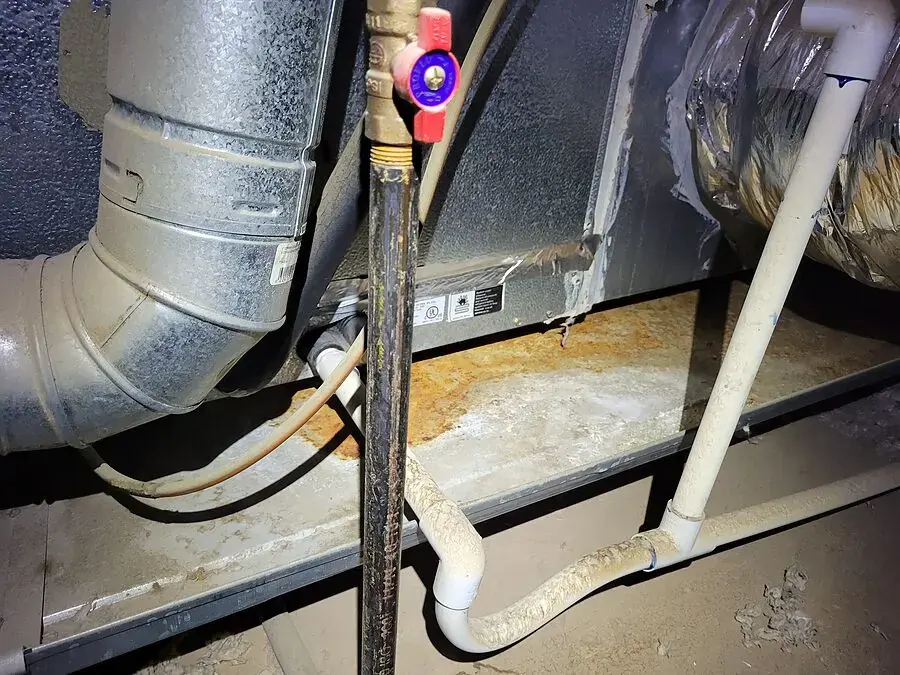
In Seminole's humid climate, an air conditioner pulls a steady stream of water out of the air and sends it down a small drain. When that drain clogs, the water has nowhere to go but out of the pan and into the house.
Key takeaways
- Seminole's air handlers often sit in closets, garages and attics, and a clogged condensate drain makes them overflow.
- The humid subtropical climate keeps units running and draining for much of the year, with a June to September rainy season on top.
- The location sets the damage: a closet wets walls and floors, a garage wets the slab and an attic wets insulation and ceilings.
- Switching the unit off at the thermostat and the breaker keeps the water from growing.
- A ceiling that holds water can sag, so it is treated as unsafe until it is checked.
How an AC drain overflow starts
An air conditioner cools air by pulling moisture out of it. That water, called condensate, drips into a pan and leaves the house through a small drain pipe.
Algae, slime and debris can clog that pipe over time. Once it is blocked, the pan fills and spills, and some systems have a float switch that shuts the unit off when the pan gets too full.
Seminole's homes and conditions
Seminole's climate is humid subtropical, with a June to September rainy season, so air conditioners run and drain for much of the year. Many homes date from the 1970s and 1980s, and their air handlers sit in closets, garages and attics whose condensate drain pipes can clog.
Many Seminole homes also sit empty for part of the year. A unit left running in an empty house can overflow for days before anyone sees the water.
Where the water goes: closet, garage or attic
The location of the air handler decides what gets wet first.
A closet air handler
Water spreads across the closet floor, soaks the wall bottoms and runs under the door into hallways or bedrooms. Baseboards, carpet and the drywall behind the unit take the damage first.
A garage air handler
Water spreads across the slab and toward the garage door, and it can wick into the drywall around the unit and into boxes stored on the floor. Concrete dries slowly, so readings matter.
An attic air handler
Water collects in the pan under the unit and then drips into insulation and onto the ceiling drywall below. The stain may appear in a hallway or bedroom far from the unit, because water follows framing before it drops.
Early signs of a clogged AC drain
The warning signs often appear before the water does.
- A brown or yellow stain on a ceiling below an attic unit.
- Standing water in the drain pan or a musty smell near the air handler.
- A system that shuts off or stops cooling, which can mean the float switch has tripped.
- Damp drywall, baseboards or carpet around a closet air handler.
- Wet insulation or dripping at the air handler in the attic.
What to do first
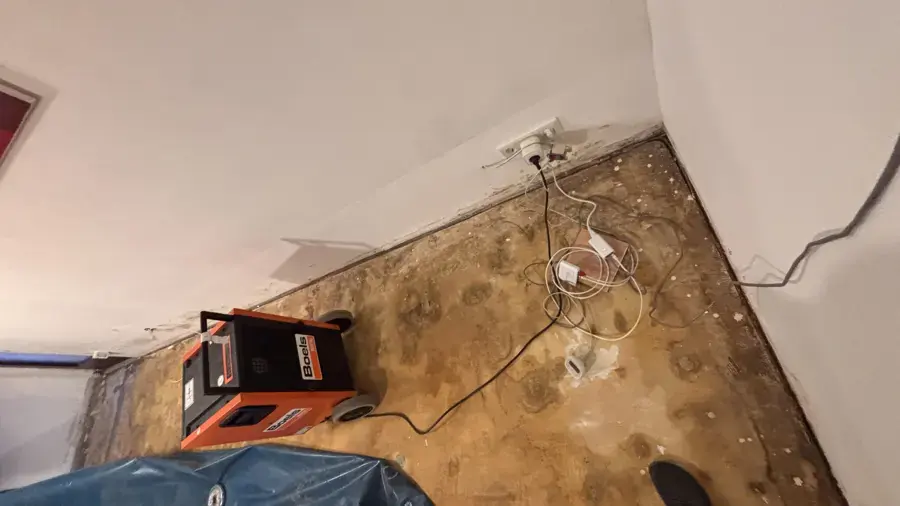
Switching the system off keeps the condensate from adding to the problem. A technician clears the drain, and AC condensate leak cleanup in Seminole deals with the wet materials the overflow left behind.
Water extraction removes standing water from a closet or garage floor so it does not spread further.
- Turn the system off at the thermostat and at the breaker.
- Soak up standing water and move stored items off wet floors.
- Photograph the pan, the drain outlet and every stain with the date visible.
- Stay clear of a ceiling that bulges or sags, since it can fall.
- Have an air conditioning technician clear the drain before the unit runs again.
The air conditioning technician
A technician clears and flushes the drain, checks the pan and tests the safety switch if the system has one. The unit stays off until that is done.
The drying team
The restoration team maps the wet area, pulls up standing water and removes what cannot be saved. Air movers and dehumidifiers then run until the readings reach the dry goal.
Drying ceilings, insulation and framing
Water from above is usually a Class 3 loss under the IICRC S500 standard, because ceilings, insulation and walls take on water faster than a floor. Saturated drywall and wet insulation are removed, and the framing around them is dried.
Ceiling leak water damage is handled by cutting out what will not dry, then running air movers and dehumidifiers in the open cavity. Structural drying continues until the readings meet the dry goal, since damp materials can start growing mold within 24 to 48 hours.
In Seminole's humid climate the air itself adds moisture to wet materials, so drying equipment runs with the house closed and the readings, not the weather, decide when it stops.
- Sagging or stained drywall is cut out, not painted over.
- Wet insulation is removed because it holds water against framing.
- Wall bottoms and baseboards around a closet unit are opened if readings stay high.
- A concrete garage floor is dried with dehumidifiers and monitored until it matches the dry goal.
When the unit is in a condo or villa
Seminole also has condo and villa communities, where an air handler overflow can drip into the unit below or into a wall shared with a neighbor. A leak that starts in an upstairs closet can appear as a ceiling stain downstairs.
Telling the neighbor and the association early gives everyone the chance to protect belongings and photograph the damage. Each affected unit then gets its own readings, since water in a cavity does not stop at a boundary.
- Tell the unit below and the association as soon as the overflow is found.
- Turn the system off and keep it off until the drain is cleared.
- Keep a dated photo record of the pan, the stains and any wet walls in every unit.
Preventing the next overflow
Most overflows are preventable. A technician can flush and treat the drain, and a float switch can shut the system off when the pan fills.
Seminole's median age was 55.9 in the 2020 Census, many owners are retirees and many homes sit empty for part of the year, so a drain check before a long absence is worth scheduling.
- Schedule a drain flush before a long absence and before the summer rainy season.
- Ask the technician about a float switch if the unit sits above finished space.
- Look at the pan for standing water whenever passing the air handler.
Questions
Why does an air conditioner leak water inside the house?
The unit removes moisture from the air, and that water leaves through a small drain pipe. When the pipe clogs, the pan overflows and the water spills into the house.
Is AC condensate water clean?
It is not drinking water, and the pan often holds algae and debris, so wet porous materials are handled with care and dried to a dry goal.
Can a clogged AC drain make a ceiling fall?
Water that collects above a drywall ceiling adds weight and softens the board, so the ceiling can sag and fall. A sagging ceiling should be treated as unsafe until it is checked.
Should the air conditioner keep running after a leak?
No. Turning it off at the thermostat and the breaker stops new condensate while the drain is cleared and the wet materials are dealt with.
Where in a Seminole home does the water usually appear?
It depends on where the air handler sits. A closet unit wets nearby walls and floors, a garage unit wets the slab and an attic unit wets insulation and ceilings, sometimes far from the unit.
Does homeowners insurance cover an AC drain overflow?
Coverage depends on the policy and the cause. Many policies cover sudden water damage but may treat slow or maintenance related leaks differently, so the policy wording decides.
How often should an AC drain be cleaned?
An air conditioning technician sets the schedule. Clearing the drain before the summer rainy season and before a long absence is a common routine.