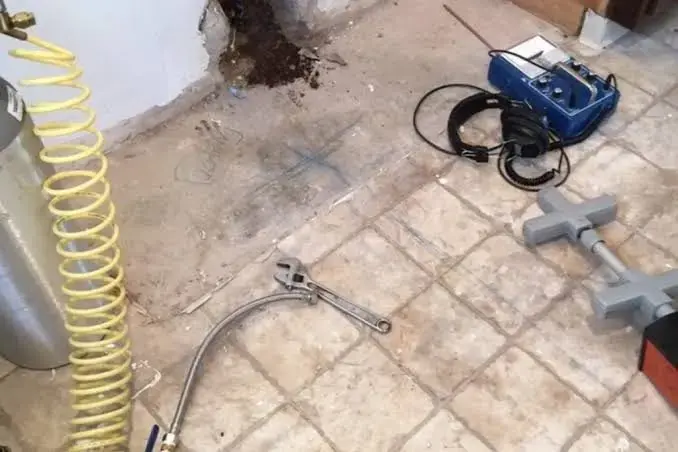
A large share of Seminole's homes date from the 1970s and 1980s, and many of the houses are concrete block built on slabs. The water supply pipes run in and under that concrete, so a leak can soak flooring for weeks before a stain gives it away.
Key takeaways
- Seminole's older block homes sit on slabs, and copper supply pipes in and under the slab can develop pinhole leaks.
- A warm patch on the floor, damp grout and a water meter that keeps moving with every tap off are the classic warning signs.
- The main valve stops the water, a plumber repairs the pipe and a drying team dries the concrete, flooring and wall bottoms.
- With sandy soil and a high water table, the dry goal is set against readings from an unaffected part of the same house.
- Homes that sit empty for part of the year can leak for a long time, so the main valve is closed before a long absence.
Why slab leaks are a Seminole pattern
The City of Seminole was incorporated on November 15, 1970, the last city incorporated in Pinellas County. A large share of its homes and condos date from the 1970s and 1980s, and many of the houses are concrete block on slabs.
Slab construction hides the plumbing. Supply pipes run in and under the concrete, so the first sign of trouble is often damage that has already spread.
Copper supply pipes
Copper supply pipes in and under slabs can develop pinhole leaks. A pinhole sends a thin stream into the ground and concrete beneath the floor long before anything shows on top.
Cast iron drains
Older slabs also carry cast iron drain pipes that scale and crack with age. That problem ends in a backup, not a warm floor, and a sewage backup is cleaned up as a separate job.
Some homes have polybutylene
Some homes from the late 1970s to the mid 1990s were plumbed with polybutylene, a plastic supply pipe known for failing at its fittings. A plumber can tell which pipe a house has.
Signs that a supply leak is running under the floor
A slab leak rarely announces itself with a puddle. The signs are quieter and appear in the lowest, least noticed parts of the house.
The simplest check is the water meter. With every tap, toilet and appliance off, a dial or leak indicator that keeps moving means water is escaping somewhere in the pipes, and slab leak water damage in Seminole becomes two jobs: finding the pipe and drying what it soaked.
- A warm patch on tile or concrete, which can mean a hot water pipe is leaking below.
- Damp grout, a musty smell, or baseboards that feel wet or look swollen.
- Laminate or wood flooring that lifts, cups or buckles for no clear reason.
- The sound of running water when every fixture and appliance is off.
- A water bill that climbs with no change in use.
First steps once a leak is suspected
The order matters, because the supply keeps adding water until it is shut off.
Water extraction in Seminole and drying do not have to wait for the pipe repair. Damp materials left in place for 24 to 48 hours can start growing mold, so the wet work can begin while the plumber is still diagnosing.
- Shut the supply: close the main shutoff valve at the house to stop new water.
- Check the meter: read it, wait, then read it again with every fixture off, and photograph both readings.
- Clear the damp area: move rugs, boxes and furniture off the floor and lift loose items out of wet carpet.
- Document first: photograph damp grout, stains and warm spots before any flooring is cut or lifted.
- Protect electronics: keep cords, power strips and devices away from wet floors.
Who does what: the plumber and the drying team
A slab leak needs two trades, and each one solves a different problem. They can work at the same time.
The plumber
A plumber locates the leak, often with listening gear or a thermal camera, and chooses a repair. The options are fixing the pipe at the leak, rerouting the supply through the attic or walls, or replacing the failing run.
Some repairs need a section of floor opened, which is worth photographing first.
The drying team
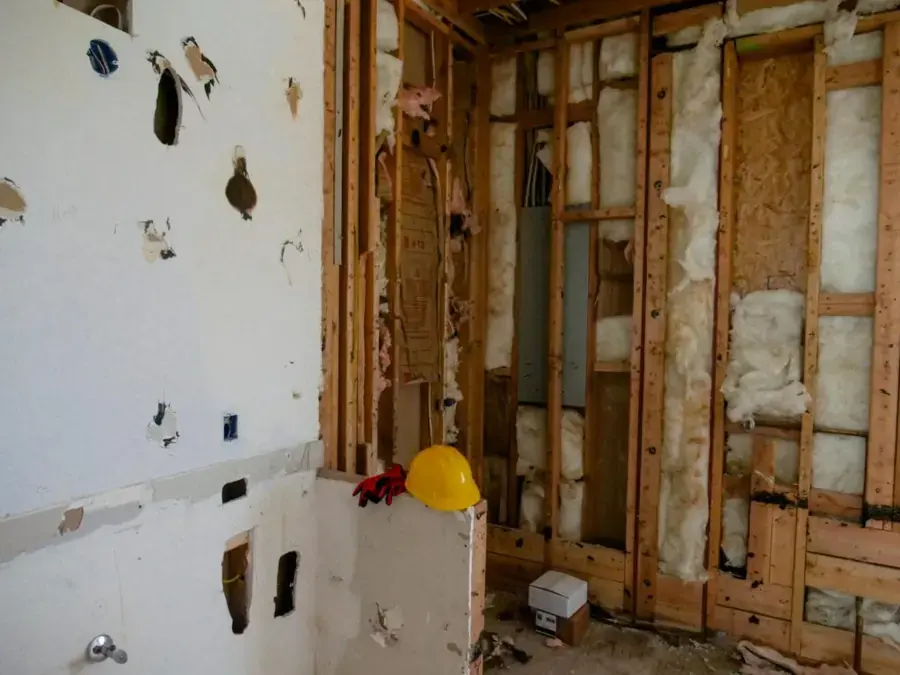
The restoration team maps how far the water traveled with moisture readings and infrared imaging, removes flooring that traps water and sets the drying equipment.
That work can begin before the plumber finishes, since the water already in the structure keeps doing damage.
How a wet slab gets dried
Concrete holds water far longer than the flooring on top of it, so a slab dries more slowly than a carpeted room. Under the IICRC S500 standard it often counts as a specialty drying job, since dense materials give up water slowly.
Sandy soil and a high water table can also put ground moisture under a slab, so the dry goal is set against readings from an unaffected part of the same house. The record kept during structural drying shows when the concrete has reached that goal.
- Tile, laminate, carpet and pad that trap water are lifted so the concrete can release moisture.
- Baseboards come off and wall bottoms are checked, because water wicks upward into drywall.
- Air movers and dehumidifiers run around the clock, and dense spots may need heat or a desiccant dehumidifier.
- Readings are logged every day, and the equipment stays until the slab and walls reach the dry goal.
Empty homes, retirees and slow leaks
Seminole's median age was 55.9 in the 2020 Census, many owners are retirees, and many homes sit empty for part of the year. A slab leak in a house nobody visits can run for weeks.
Water heaters in garages and interior closets and air handlers in closets, garages and attics add other places for a leak to start. A quick walk through the house after any long absence is worth the few minutes.
- Close the main valve before leaving for a long stay.
- Ask a neighbor or property manager to check for damp floors and read the meter now and then.
- After a return, compare the first water bill with earlier ones, since a jump is worth a meter test.
Insurance and records for a slab leak
Policies differ on slab leaks. Some pay for the damage that follows a sudden pipe failure but treat the cost of reaching the pipe differently, so the insurer is worth asking before any floor is cut.
A claim file comes together faster when the records start early: meter photos, dated pictures of damp areas, the plumber's findings and the daily moisture log from the drying team.
Questions
How can a Seminole homeowner tell a slab leak from a roof or air conditioner leak?
A slab leak appears at floor level, with warm or damp spots, wet baseboards and a meter that keeps moving with everything off. Roof and air conditioner leaks usually leave stains on ceilings and walls first.
Does every slab leak mean breaking up the floor?
Not always. A plumber may reroute the supply pipe through the attic or walls, or repair it at the leak. The flooring over the wet area still usually comes up so the concrete can dry.
Is water from a leaking supply pipe clean?
It starts as Category 1 water. If it sits and soaks into porous materials for a long time it can degrade to a higher category, which is why drying starts early.
Who comes first, the plumber or the drying team?
The main valve comes first, since it stops the water. After that the two trades can work at the same time, because drying does not depend on the pipe repair being finished.
What does polybutylene mean for a Seminole homeowner?
Some Seminole homes from the late 1970s to the mid 1990s have polybutylene supply pipe, which is known for failing at its fittings. A plumber is the right person to identify it and advise on replacement.