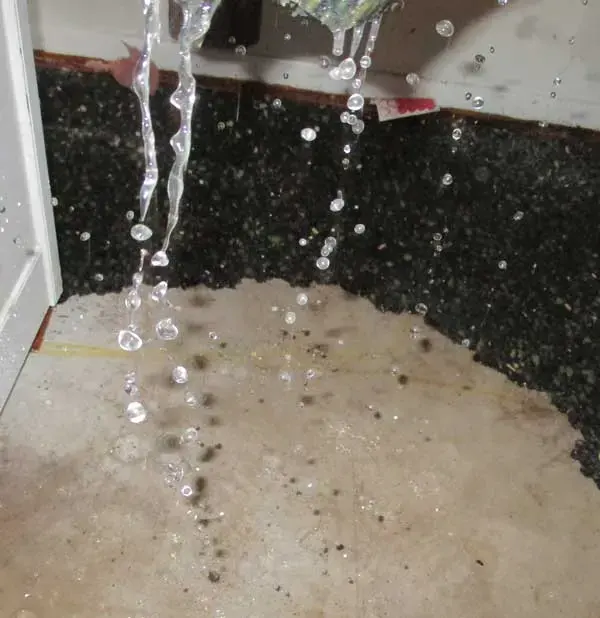
In South Pasadena, most housing units sit in buildings with five or more units, so a leak in one place often becomes a problem in several. A ceiling stain below, a wet wall beside and a dripping fixture above can all trace back to one failed hose or pipe.
Key takeaways
- About 81.5% of South Pasadena's 4,998 housing units, 4,074 of them, are in buildings with five or more units, so shared ceilings and walls are the norm.
- Shut off the leak source if it is reachable, then tell the neighbors, the owner and the association before the water spreads.
- Photograph every wet surface and keep a list of damaged belongings before anything is moved.
- A flooded ground floor can make every unit above it uninhabitable, according to the city, so upper floors are not automatically safe.
- Each affected unit needs its own moisture readings and log, because water does not stop at a unit boundary.
Why a leak rarely stays in one unit
The American Community Survey counts 4,998 housing units in South Pasadena for 2020 to 2024. About 81.5% of them, 4,074, are in buildings with five or more units, and about 75.5%, 3,774, are in buildings of 20 or more.
About 50.9%, or 2,542, are in buildings of 50 or more units, while only about 5.8%, or 291, are single-family detached homes. In most South Pasadena buildings, one resident's ceiling is another resident's floor.
The median home was built in 1978, and about 55.4% of units, 2,769, were built before 1980. Plumbing in many buildings is not new.
Where condo and apartment leaks usually start
Most multi-unit leaks begin with a small part that fails, not a burst main. About 18.1% of South Pasadena units, 904, are vacant but kept for seasonal, recreational or occasional use, and a leak in a unit nobody is using can run unnoticed.
Appliances and fixtures
Washing machine hoses, dishwasher connections, ice maker supplies, water heaters and toilet connections are the usual suspects. A hose that lets go while the owner is away can run until someone notices the ceiling below, and appliance leak cleanup starts with finding and closing that source.
Pipes in shared walls
Supply and drain pipes often run through walls and floors shared with neighbors. A slow leak inside a wall can stain a neighbor's ceiling before anyone in the unit with the pipe sees a sign.
Air handlers
An air conditioner drain that clogs can overflow a pan and wet the ceiling below. The city describes its climate as semi-tropical, so units work hard for much of the year.
First steps in the unit where the leak starts
Stopping the water comes first. Fixtures usually have their own shutoff valves, and larger problems may need the unit or building shutoff.
- Close the shutoff at the fixture, appliance or water heater, or the unit's main valve if the source is unclear.
- Switch off power to wet areas only if the breaker panel is dry and safely reachable.
- Tell the neighbors below and beside the unit, the owner if the unit is rented, and the association or building manager.
- Photograph the source, the wet surfaces and any damage before cleanup begins.
- Soak up standing water and move belongings out of the wet area.
First steps in the unit that is getting wet
The unit below or beside a leak faces a slower version of the same problem. Water drips, travels along framing and gathers above a ceiling until it finds a way out.
About 44.2% of occupied South Pasadena homes, 1,487 of 3,363, are renter-occupied, so one leak often involves a tenant, an owner and a neighbor at once.
- Keep away from a ceiling that bulges or sags, since it can fall.
- Turn off ceiling lights and fans that sit under a wet area.
- Place a container under drips and move furniture and electronics out of the way.
- Photograph stains, drips and any wet walls with the date visible.
- Report the water to the building manager or association right away, even if the source is not yet known.
How the restoration team handles a multi-unit loss
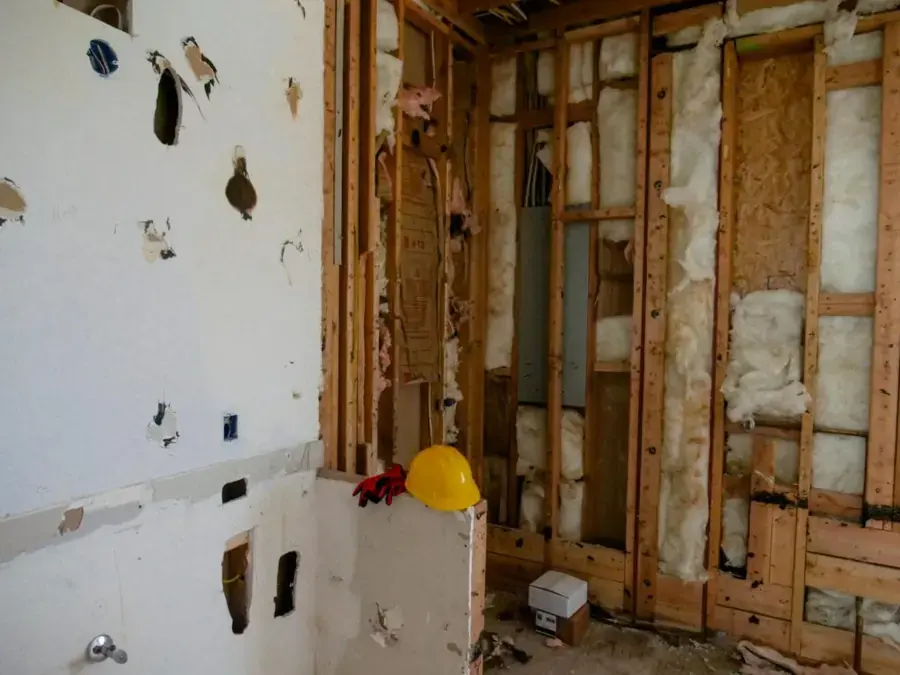
A ceiling that held water often needs more than a fan. Drywall that stays saturated or sags is cut out so the cavity above can dry, and wet insulation is replaced.
Every affected unit gets separate readings and a separate log, because water in a floor or ceiling cavity does not stop at a unit boundary. Condo water damage in South Pasadena is worked unit by unit, with equipment above and below the source.
Ceiling leak water damage from a clean source is often dried in place when it is caught early. The same approach applies to the condo and villa communities in Seminole, where condo water damage is handled the same way.
- Moisture mapping covers the source unit and the units above, below and beside it.
- Saturated or sagging ceiling drywall is cut out, and wet insulation is replaced.
- Air movers and dehumidifiers are placed on every affected floor, with a separate log for each unit.
- Clean supply water is Category 1, a washing machine overflow is Category 2 and a sewage backup is Category 3, and the category sets the plan.
When the water comes from outside
The city warns that a flooded ground floor can make every unit above it uninhabitable, so upper-floor condo owners are not automatically safe from flood damage.
In October 2024, BayNews9 reported that a South Pasadena apartment building for seniors closed after Hurricane Helene's storm surge flooded its first floor and destroyed the power equipment there. More than 160 residents needed new homes, and management estimated six to ten months to restore power and make repairs.
The city also says homeowner insurance does not cover flood losses and that a new flood insurance policy has a 30 day waiting period before it takes effect.
Permits, records and who handles what
The city's permit list requires a permit for water heater replacement, drywall work and demolition of any kind. Changing flooring, painting and replacing a toilet in the same location with the existing supply and drain need no permit.
Responsibility for a multi-unit loss depends on the cause, the association's documents and the policies involved. Photos, the plumber's findings and the daily moisture log keep every party working from the same facts.
For local help, see water damage restoration in South Pasadena.
Questions
Who is responsible when a leak starts in the unit above?
Responsibility depends on the cause, the association's governing documents and the policies involved. The first job is to stop the water and document it, and the insurers and the association sort out the rest.
Can a wet ceiling be dried without removing it?
Sometimes. A ceiling caught early after a clean water leak can be dried in place. Drywall that stays saturated or sags is removed.
Does homeowner insurance cover a flooded ground floor?
The city says homeowner insurance does not cover flood losses, and a new flood policy has a 30 day waiting period before it takes effect.
Why does a vacant unit matter in a shared building?
About 18.1% of South Pasadena units, 904, are vacant but kept for seasonal, recreational or occasional use. A leak in an unused unit can run for days before anyone notices.
Does repair work after a leak need a permit?
Some of it does. The city's permit list includes water heater replacement, drywall work and demolition of any kind, while changing flooring and painting need none.
What should a tenant do first when a ceiling starts to leak?
Stay clear of the wet area, protect belongings, photograph the damage and tell the landlord or building manager right away. With about 44.2% of occupied South Pasadena homes renter-occupied, tenants are often the first to see the water.
What is Category 2 water?
Under the IICRC S500 standard, Category 2 water is significantly contaminated, such as water from a washing machine or dishwasher overflow. It is cleaned up and dried with more care than clean supply water.