Sewage Backup Cleanup in Pinellas Park, FL
Sewage in a home is Category 3 water and never a do-it-yourself job. The extraction crew works in protective gear, removes what the backup touched and treats and dries the area with readings logged for the claim.
(888) 621-2041Call about a Pinellas Park sewage backup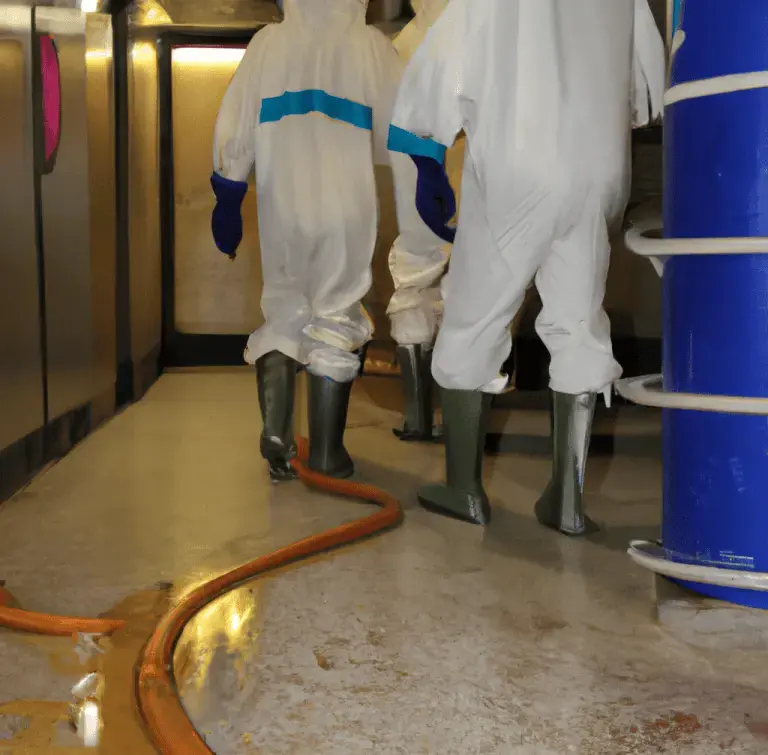
Step by step: sewage backup cleanup in Pinellas Park, FL
Contain and protect
Plastic barriers seal the area, and the crew puts on protective gear.
Extract and remove
Sewage is extracted, and contaminated carpet, pad and wet drywall are removed.
Clean and treat
Framing, subfloor and hard surfaces are cleaned and treated with an antimicrobial.
Dry and verify
Dehumidifiers and air movers dry the area, and readings confirm it is ready.
First moves for sewage backup cleanup in Pinellas Park
- Stop using water
Do not flush, run sinks or use the washer until a plumber clears the blockage.
- Keep everyone out
Keep family and pets out of the affected rooms.
- Do not clean it yourself
Skip mops, towels and shop vacuums; they spread contamination.
- Photograph from outside
Take photos of the affected rooms from a dry doorway before anything is removed.
- Call the cleanup crew
Say which fixtures backed up so containment is set up right.
What does sewage backup cleanup cost in Pinellas Park, FL?
Sewage backup cleanup in Pinellas Park runs from $2,500 for one contained bathroom to $25,000 or more for several rooms or a business. The cost calculator gives a closer range.
One bathroom, contained
- Sewage extracted
- Surfaces treated
- Readings logged
Bathrooms and hallway
- Carpet and trim removed
- Wet wall sections cut out
- Containment and air scrubbing
Several rooms or a business
- Large-area removal
- Phased cleaning and drying
- Complete claim file
Each figure is a typical range, not a quote. Water category, wet square footage, material class and how soon drying began move the final number. The water damage cost calculator narrows it for your own loss.
Sewage backups carry bacteria into the places people live. The water is Category 3 from the start, so the work follows a protective routine: contain the area, wear the right gear, remove what cannot be cleaned and treat what can.
Sewers, lift stations and heavy rain
The city's Sewer Division maintains 105 lift stations and collects about 5.0 million gallons of wastewater each day, sending it to regional treatment plants in St. Petersburg and Pinellas County. WUSF reported that after Debby's downpours in August 2024, 30,000 gallons of wastewater overflowed in Pinellas Park, 7,000 gallons were recovered, and the flow reached storm drains leading to the Cross Bayou Canal.
In March 2022, Patch reported that Congress had approved $700,000 for a sanitary sewer interceptor in Pinellas Park meant to prevent a repeated raw sewage overflow in rainy weather, with the first funding covering design of a larger force main on Belcher Road.
- Carpet, pad and baseboards the water touched
- Drywall and insulation that wicked sewage
- Particleboard, mattresses and upholstered items
- Anything porous that cannot be cleaned completely
Hard surfaces are scrubbed, treated with an antimicrobial and dried, then verified before the area is released.
Who does what in a backup
A plumber clears the blockage or repairs the drain, and no one in the home should run water until that is done. The mitigation team then extracts, removes, cleans and dries, working under containment so the contamination does not spread.
Rooms beyond the backup stay protected: floor protection runs along the path out of the house, doors are sealed with plastic and the air is filtered, so clean rooms stay clean.
Trade fact: household towels and wet vacuums spread contamination, so Category 3 water is extracted with dedicated equipment and treated as waste.
Cleaning, drying and verifying
After removal, the exposed framing and subfloor are cleaned and treated, HEPA air scrubbers run behind containment, and dehumidifiers and air movers bring the structure to its dry standard. Readings and photos from each step go into the claim file, with a record of what was removed and why.
Backups in a building can reach neighbors through shared drains and walls, so condo and villa water damage work is documented unit by unit, and larger events fall under storm surge and flood cleanup.
Sewage Backup Cleanup questions in Pinellas Park, FL
Is it safe to clean up sewage myself?
No. Sewage is Category 3 water with bacteria and viruses, so protective gear, containment and antimicrobial treatment are needed, and household tools spread contamination.
Who clears the blockage, the plumber or the cleanup crew?
The plumber clears the blockage or repairs the drain. The cleanup crew extracts the sewage, removes contaminated materials and cleans and dries the area.
What gets thrown out after a backup?
Carpet, pad, baseboards and drywall the sewage touched, plus particleboard and upholstered items. Hard surfaces are cleaned and treated instead of discarded.
Can sewage come back after the first cleanup?
Not if the blockage is cleared and the area is dried and treated. Repeat backups usually mean the drain problem is still there, which is a plumber's call.
Will insurance cover sewage backup damage?
Many policies exclude sewer backup unless an endorsement was added, so your adjuster's wording decides. Photos, readings and the plumber's invoice support the claim.
Which Pinellas Park areas get sewage cleanup?
Sewage backup calls in ZIP 33781 and 33782 are handled for homes and businesses alike, at any hour; for neighboring cities, check the service area.
Sewage backup cleanup across Pinellas Park, FL
Sewage backup cleanup serves ZIP 33781 and 33782, in houses, rentals and multi-unit buildings, and in shops and offices along the Park Boulevard retail stretches, with containment built to each floor plan.
The same service nearby: sewage backup cleanup in Seminole, Kenneth City, Largo.
Sewage backup in Pinellas Park?
The response team works 24/7 on sewage backups, with protective gear, containment and a full record for your adjuster.