Manufactured Home Water Damage in Largo, FL
A manufactured home floor is built from joists, decking and belly insulation, so a leak can soak all three before a stain shows. The restoration team removes wet insulation, dries the framing and replaces swollen decking.
(888) 621-2041Call about water in a Largo manufactured home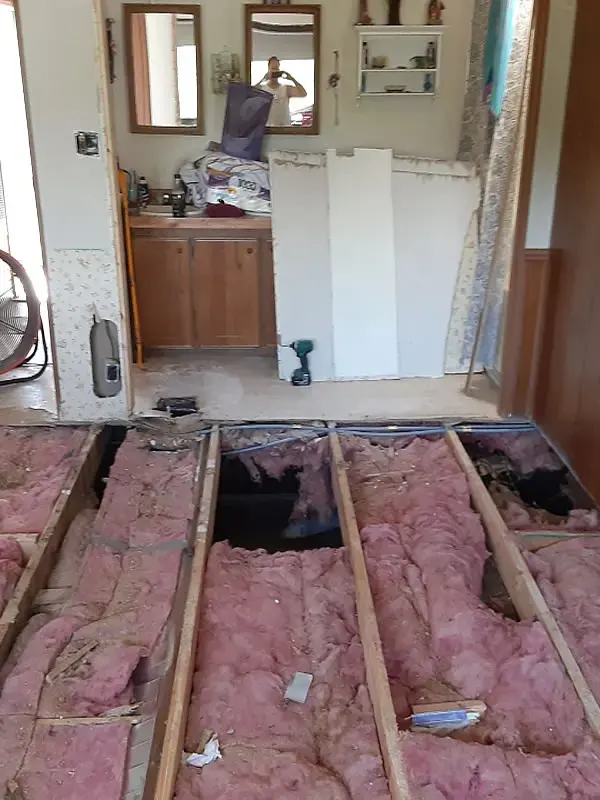
Step by step: manufactured home water damage in Largo, FL
Find the wet zone
Meters and probes outline wet floor, insulation and wall bottoms.
Open and remove
Floor coverings and wet belly insulation come out, and the decking is checked for softness.
Dry the framing
Air movers and dehumidifiers dry the joists and the exposed cavity.
Replace and record
Swollen decking is replaced, and readings, photos and logs are filed.
First moves for manufactured home water damage in Largo
- Shut the water off
Close the main shutoff or the valve under the leaking fixture.
- Cut power to wet rooms
Switch off breakers for wet areas before stepping on a soft floor.
- Avoid soft spots
A spongy floor may not hold weight, so stay off it.
- Photograph the floor
Capture the wet area, any soft decking and the leak source before repairs begin.
- Call for floor checks
Ask for readings in the floor, the belly and nearby walls.
What does manufactured home water damage cost in Largo, FL?
One room with wet insulation sits in the first tier. A swollen bath or kitchen floor needing new decking costs more, and a belly and floor wet across the home sits at the top.
One wet room, floor and belly
- Wet insulation removed
- Joists and decking dried
- Daily readings
Bath or kitchen decking replaced
- Swollen decking replaced
- Fixtures pulled and reset
- Moisture mapping
Belly and floors across the home
- Large-area insulation removal
- Several rooms of decking
- Claim documentation
Each figure is a typical range, not a quote. Water category, wet square footage, material class and how soon drying began move the final number. The water damage cost calculator narrows it for your own loss.
In a manufactured home the floor is a thin sandwich: finish flooring, decking, joists and insulation, with a belly wrap below. When water gets in, it can sit in the insulation against the decking for a long time, and the first sign is often a soft spot underfoot.
Mobile homes in Largo
About 28.0% of Largo housing units, an estimated 14,131, are mobile homes. Water damage in these homes follows its own rules because the floor is lighter and the cavity below is closed.
That makes quick checks under sinks, behind toilets and around the water heater worth doing.
Why wet insulation is the problem
Wet belly insulation holds water against the decking and the joists, and it dries slowly because the cavity is closed. The extraction crew opens the belly where meters read wet, removes soaked insulation and lets air reach the framing.
- Wet insulation removed from the belly
- Joists checked for moisture and softness
- Decking dried or replaced
- Plumbing and supply points inspected
Once the insulation is out, fans and dehumidifiers dry the exposed joists, and a moisture meter confirms the wood has reached the goal before anything is closed up.
Floors, decking and fixtures
Particleboard or plywood decking that has swollen or gone soft is replaced, since drying does not restore its strength. Toilets, tubs and cabinets may be pulled and reset so the decking under them can be dried or swapped.
Replacing decking is limited to the wet section. Healthy decking stays, which keeps the repair smaller.
Trade fact: A floor that feels solid on top can still have wet insulation and soft decking underneath, so meters and a probe, not footsteps, decide what is replaced.
Where the water comes from
Leaks reach the floor from supply pipes, drains, appliance connections and roof seams, and storm water can soak through a ceiling and drip into the floor below. A leak under a sink or behind a toilet is the usual path, while a roof seam usually shows first on a ceiling. The roof leak and burst pipe services cover those paths in more detail.
Claims for mobile home losses
Photos of the opened floor, the wet insulation and the failed source help an adjuster, as do daily moisture readings and receipts for equipment and disposal. The mitigation team keeps the logs in one folder so every room has a start and end reading.
Manufactured Home Water Damage questions in Largo, FL
Why are floors in manufactured homes handled differently?
The floor is a light system of decking, joists and belly insulation in a closed cavity, so water can stay hidden and slow to dry.
Does the belly insulation have to be replaced?
Wet insulation is removed because it holds moisture against the decking and dries slowly. Insulation that stayed dry can often remain, and replacement is part of the repair stage.
Can a soft floor be dried instead of replaced?
If the decking is only damp and still firm, drying can work. Once it swells, crumbles or gives underfoot, replacement is the safer choice.
Does insurance cover water damage in a mobile home?
Coverage depends on the policy and the cause. Sudden pipe or appliance failures are often covered, while slow leaks and long-term seepage are often limited, so photos and logs matter.
What is checked after a leak under a sink?
The cabinet base, the floor beneath it, the wall bottoms and the belly below, since water follows the lowest path through the floor system.
Is mold likely in a closed floor cavity?
A cavity that stays wet for 24 to 48 hours or longer invites growth, and closed spaces dry slowly.
Manufactured home water damage across Largo, FL
Manufactured home water damage work covers homes across Largo, from Downtown Largo and the Walsingham Park area to Bay Ranch, Ranchero Village and the nearby communities of Ridgecrest and Harbor Bluffs.
The same service nearby: manufactured home water damage in Seminole, Pinellas Park, Kenneth City.
Water under a Largo manufactured home?
The drying team works 24/7 to find the wet zone, remove soaked insulation and dry the floor system before the decking fails.