Structural Drying and Dehumidification in Largo, FL
Water that is out of sight is not out of the building. The drying team sets dehumidifiers and air movers, then reads the framing, floors and slab each day until they match the dry standard.
(888) 621-2041Call about drying a Largo home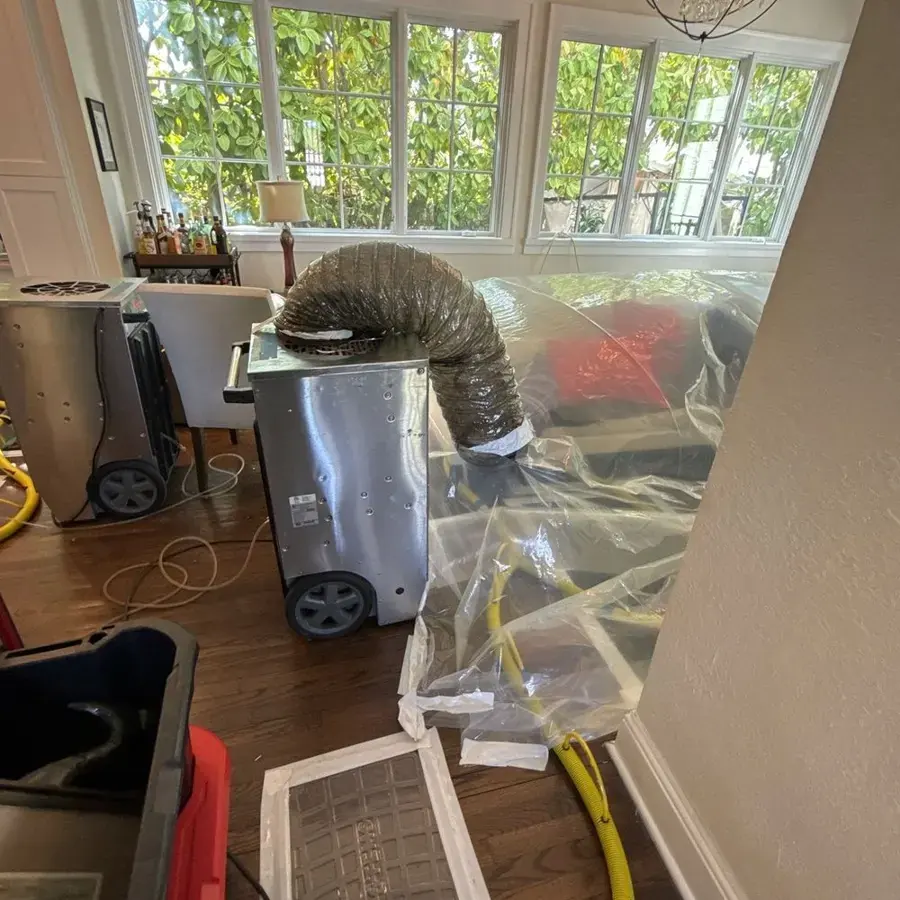
Step by step: structural drying in Largo, FL
Plan the job
Class and category are set, wet materials mapped, equipment sized.
Set the equipment
Air movers, dehumidifiers and mats go in on the plan.
Read and adjust
Daily readings steer moves and extra gear where drying stalls.
Confirm and remove
Materials reach goal, then equipment leaves with a final log.
First moves for structural drying in Largo
- Turn off the source
Stop the leak or close the valve first.
- Leave equipment running
Do not unplug or move drying gear.
- Keep wet rooms closed
Closed doors keep dehumidifiers working on the wet space.
- Note odd readings
Report musty smells, warped floors or damp spots.
- Keep the logs
The daily readings go in the claim file.
What does structural drying cost in Largo, FL?
Drying cost follows the number of rooms, the material types and the class of loss. Wood floors and concrete under Class 4 conditions need desiccant gear and longer monitoring.
A room or two
- Air movers and LGR
- Daily readings
- Drying logs
Slab and walls across the home
- Wall cavity drying
- Slab drying
- Moisture mapping
Class 4: wood floors and concrete
- Desiccant dehumidifiers
- Floor drying mats
- Extended monitoring
Each figure is a typical range, not a quote. Water category, wet square footage, material class and how soon drying began move the final number. The water damage cost calculator narrows it for your own loss.
Drying is physics and airflow, not guesswork. Water moves into drywall, wood, carpet pad and concrete at different speeds, and each material dries at its own pace, so a plan has to measure each one rather than assume.
Older Largo construction
The median Largo home was built in 1978, and about 55.0% of Largo housing units were built before 1980, so drying plans should fit older construction and whatever materials a given home has. The City of Largo points to a high water table in the area, which is one more reason to measure rather than assume.
A pre-1980 house is not automatically harder to dry, but its materials are worth identifying early.
The equipment and what it does
Air movers push dry air across wet surfaces, LGR dehumidifiers pull moisture out of the air and desiccant units handle low-humidity jobs such as wood floors and dense materials. Thermal cameras and meters show where the water is hiding.
- Air movers for surface drying
- LGR dehumidifiers for the room air
- Desiccant units for Class 4 materials
- Floor mats for wood and concrete
Equipment counts depend on room volume and wet area, not on a fixed formula for the house.
Classes of water loss
IICRC S500 sorts losses into classes by how much water the materials absorbed. Class 1 and 2 jobs involve less wet material, Class 3 involves ceilings and walls, and Class 4 involves dense materials like hardwood and concrete that need deeper, slower drying.
Trade fact: Drying goals come from dry reference readings in the same home, so the target changes with the materials instead of using one number for every house.
Monitoring until dry
Readings are taken in the same spots every day and logged, so progress is visible. Equipment is moved or removed as areas reach the goal, and the final log shows every material at its target before anything is closed up. Anything that stalls gets a second look, such as a missed pocket of moisture or a dehumidifier set too far from the wet wall. The drying time estimator gives a rough idea of timing for planning.
After a flood or a leak
Structural drying follows water extraction after most losses, and storm surge and flood cleanup adds removal and treatment before drying starts. Slabs and wood floors are the slowest to dry, which is why they are watched longest.
Structural Drying and Dehumidification questions in Largo, FL
What is the difference between air movers and dehumidifiers?
Air movers push air across wet surfaces so moisture evaporates, and dehumidifiers pull that moisture out of the air so it cannot settle somewhere else. Both are needed together.
How do crews know when a home is dry?
Moisture readings on each material are compared with a dry reference reading taken in the same home, and the daily log shows them falling to that goal.
Why does equipment keep running after the surface feels dry?
Surfaces dry first while framing, subfloor and slab hold moisture deeper. Stopping early traps that moisture and invites mold, so equipment stays until the meter says otherwise.
Can hardwood floors be dried instead of replaced?
Sometimes. Floor drying mats and desiccant units can pull moisture from boards when the damage is caught early, but cupped or buckled floors may still need replacement.
Does a concrete slab need drying too?
Yes. Concrete holds water and releases it slowly, so slabs are measured and dried until they match the goal, especially before flooring is put back.
Is drying covered by insurance?
Mitigation such as drying is commonly covered for sudden water losses. The daily log is the evidence the adjuster uses to see that the work was needed and finished.
Structural drying across Largo, FL
Structural drying covers water-loss homes across Largo, including Downtown Largo, the Walsingham Park area, Ranchero Village and Bay Ranch, with crews serving ZIP codes 33778, 33774, 33773, 33771 and 33770.
The same service nearby: structural drying in Seminole, Pinellas Park, Kenneth City.
Wet walls or floors in Largo?
The drying team works 24/7 on setup and monitoring, with readings continuing until every material is dry.