Structural Drying and Dehumidification in Pinellas Park, FL
Water that has soaked into framing, slabs and floors does not leave on its own. The drying team sets dehumidifiers and air movers, takes readings every visit and stops only when the structure matches a dry reference.
(888) 621-2041Plan drying for a Pinellas Park building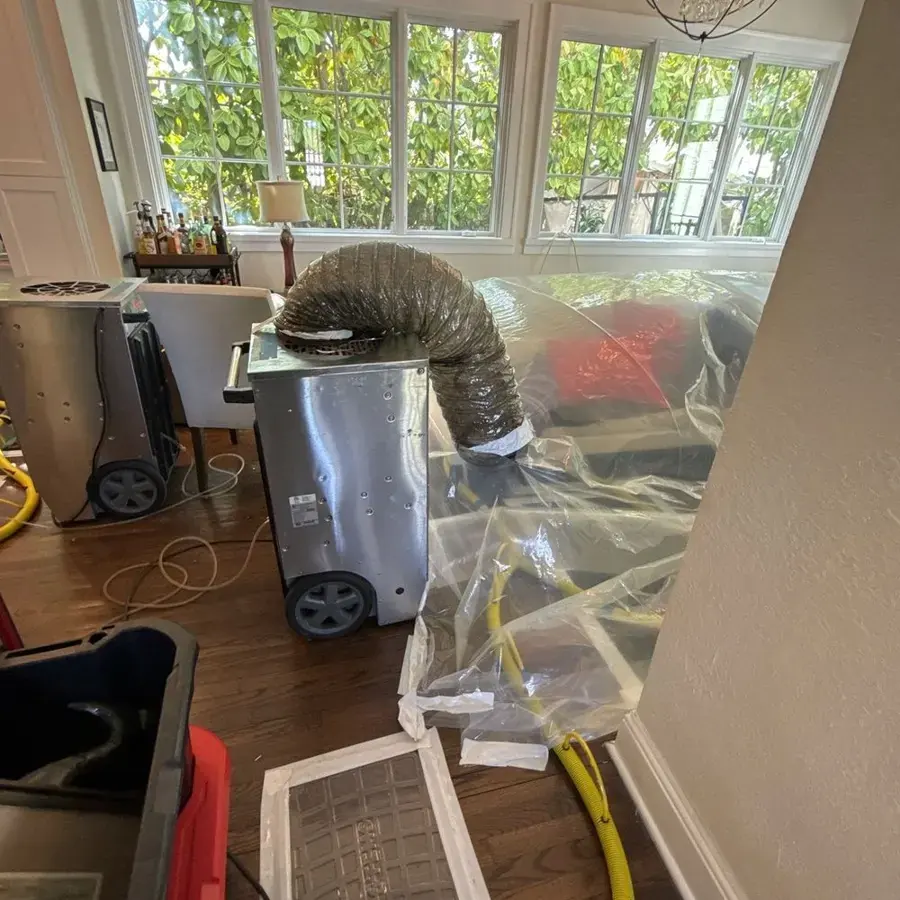
Step by step: structural drying in Pinellas Park, FL
Class the loss
Water type and class are set, and the moisture map sets equipment.
Set the equipment
Dehumidifiers and air movers go in, with desiccant units for dense materials.
Read and adjust
Daily readings steer moves, additions and removals of equipment.
Confirm dry
Final readings match the dry reference and the equipment is removed.
First moves for structural drying in Pinellas Park
- Keep it closed
Close doors and windows in wet rooms so humid air stays out.
- Remove standing water
Extract standing water first; equipment cannot dry a flooded room.
- Leave equipment running
Leave dehumidifiers and air movers on; readings need steady conditions.
- Keep a list
Note which rooms and walls were wet so each one is metered.
- Call for drying
Share the source and how long materials stayed wet.
What does structural drying cost in Pinellas Park, FL?
Structural drying in Pinellas Park runs from $1,500 for one or two rooms to $18,000 or more for Class 4 wood floors and concrete. The cost calculator refines it.
One to two rooms
- Dehumidifier and air movers set
- Readings every visit
- Drying log kept
Slab and walls, whole home
- Cavities and slab dried
- Moisture map updated
- Equipment adjusted daily
Class 4 wood and concrete
- Desiccant units running
- Mats on wood floors
- Monitoring until dry
Each figure is a typical range, not a quote. Water category, wet square footage, material class and how soon drying began move the final number. The water damage cost calculator narrows it for your own loss.
Structural drying is the long middle of a water loss: after the water is out, the materials still hold moisture, and the air in the building has to carry it away. The work is controlled evaporation, measured every visit, until framing, slab and finishes read dry.
Older homes and drying plans
The median Pinellas Park home was built in 1972, and about 11.7% of housing units date to 1939 or earlier, so drying plans have to fit older construction. Older framing, original subfloors and mixed wall materials behave differently from newer builds, so each plan starts from readings rather than assumptions.
- LGR dehumidifiers that pull water from the air
- Air movers that sweep wet surfaces
- Desiccant units for cold, dense or stubborn materials
- Floor drying mats for wood floors and slabs
Equipment counts follow the wet area and the class of water, so a plan is built from the moisture map, not from square footage alone. Class and category are set at the first walkthrough and revisited if readings surprise the team.
Humid air and the dry reference
Pinellas Park's humid subtropical climate means outdoor air cannot dry a building, so doors and windows stay closed and dehumidifiers do the work. Temperature matters as much as humidity, because warm materials release moisture faster. Moisture meters and psychrometric readings of temperature and humidity track progress against a dry reference taken from unaffected parts of the home.
Trade fact: IICRC S500 groups wet materials into four classes by how much water they hold and how fast it can leave, and a Class 4 job with wood floors or concrete needs desiccant units and floor drying mats.
When drying is finished
Equipment comes out when the readings match the dry reference on every material, not when a room feels dry. Daily logs show the starting numbers, the falling trend and the final readings, which is the record an adjuster wants to see.
Rebuilding on damp framing or slab is the mistake that drying logs exist to prevent, since finished floors, cabinets and paint trap moisture and bring odors and warping later. If water first needs removing, start with water extraction; for a slab, see slab leak water damage.
Structural Drying and Dehumidification questions in Pinellas Park, FL
How long does structural drying take?
It depends on the materials, the class of water and the humidity. Daily readings, not a fixed number of days, decide when equipment comes out.
Why can't I open the windows to dry things faster?
Pinellas Park's humid outdoor air holds a lot of moisture already, so open windows slow drying. Closed rooms with dehumidifiers dry faster.
Is the drying equipment loud, and does it use a lot of power?
Yes, it is loud and it draws power, which is a normal part of drying a structure. Equipment is added or removed as readings change.
What does a dry reference mean?
It is a set of readings from unaffected parts of the home. The wet materials have to match those numbers before drying is finished.
Can wood floors be saved?
Often, with floor drying mats and patience, if the boards have not cupped badly. Moisture readings show whether wood is drying or needs replacing.
Which Pinellas Park areas get structural drying?
Drying crews cover ZIP 33781 and 33782 at any hour; for neighboring cities, check the service area.
Structural drying across Pinellas Park, FL
Structural drying runs across ZIP 33781 and 33782, in homes of every age and in shops and offices, wherever water has soaked framing, slabs or wood floors and the readings still say wet.
The same service nearby: structural drying in Seminole, Kenneth City, Largo.
Wet structure in Pinellas Park?
The mitigation team works 24/7, setting equipment, taking daily readings and logging each reading until the structure is dry.