Structural Drying and Dehumidification in South Pasadena, FL
Drying is a measured process, not just fans. The drying team sets LGR dehumidifiers, air movers and mats from a moisture map, reads the meters daily and removes equipment only when the structure is dry.
(888) 621-2041South Pasadena structural drying help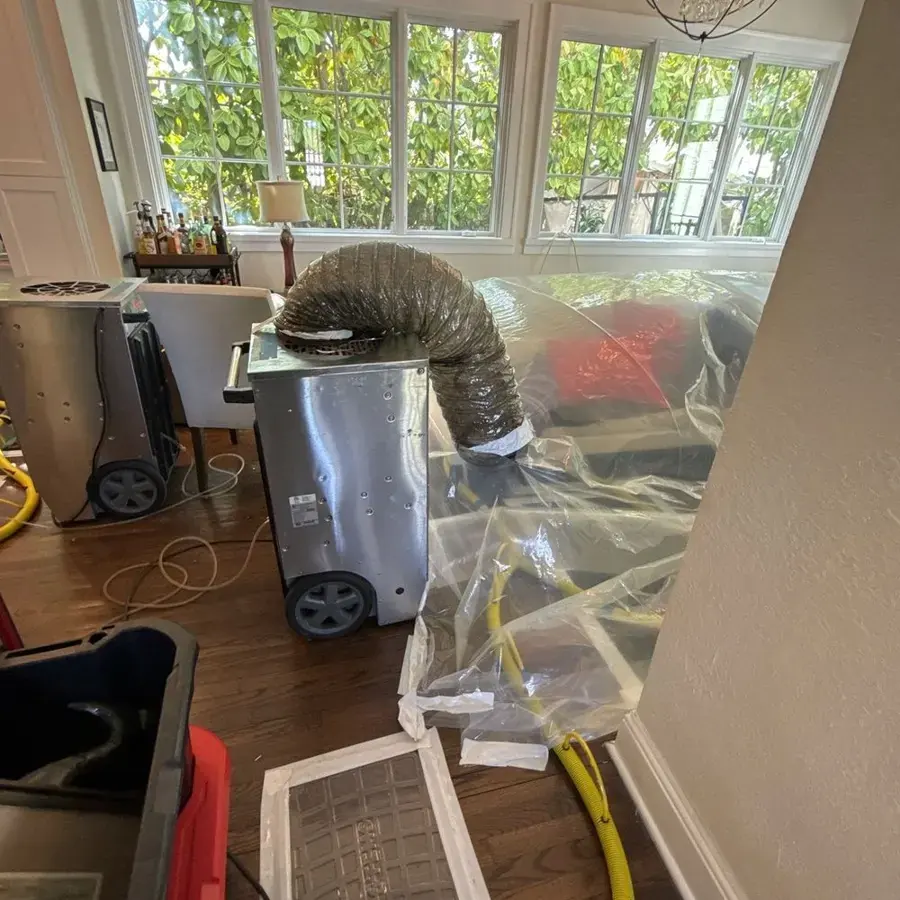
Step by step: structural drying in South Pasadena, FL
Map and classify
Meters, thermal imaging and the S500 class set the equipment plan.
Place the equipment
LGR units, air movers and mats go in from the moisture map.
Read and adjust
Daily readings steer moves, more equipment or desiccant units.
Prove the dry goal
Equipment comes out only when every material reads dry.
First moves for structural drying in South Pasadena
- Keep doors closed
Close doors and windows so the dehumidifiers work in a sealed space.
- Leave equipment on
Keep air movers and dehumidifiers running, since stopping early slows drying.
- Clear the area
Keep belongings away from the equipment and opened walls.
- Expect daily readings
The crew returns daily to read the meters and adjust equipment.
- Call about drying
Dispatch runs 24/7 for wet structures that need equipment.
What does structural drying cost in South Pasadena, FL?
Drying one or two rooms costs $1,500 to $4,000, slab and walls $4,000 to $10,000, and Class 4 wood floors and concrete $8,000 to $18,000+.
One or two rooms
- LGR units and air movers
- Daily readings
- Drying logs
Slab and walls across the home
- Wall cavity drying
- Slab drying
- Moisture map
Class 4 wood and concrete
- Desiccant units
- Drying mats on wood
- Longer monitoring
Each figure is a typical range, not a quote. Water category, wet square footage, material class and how soon drying began move the final number. The water damage cost calculator narrows it for your own loss.
Extraction removes the loose water, but structural drying removes what the building absorbed. Walls, slabs, subfloors and framing hold moisture that only controlled air, heat and dehumidification can pull out, and the drying team proves the result with meters, not with how a room feels.
How drying plans are built
Every plan starts from a few measurements:
- The class of the water loss, from one to four
- The materials that absorbed it, such as drywall, wood or concrete
- Temperature and humidity in the room and outdoors
- A written dry goal for each material
Those numbers set how many air movers and dehumidifiers go in, where they sit and how the crew adjusts them each day.
Older homes and aging materials
The median South Pasadena home was built in 1978, with 55.4% of units built before 1980, so drying plans need to fit older construction, where original subfloors and framing can hold water longer than new materials. Readings are taken deeper and for longer where the building calls for it.
Equipment and what each piece does
LGR dehumidifiers pull vapor out of the air, air movers sweep dry air across wet surfaces, and floor drying mats draw water out of wood and concrete. Desiccant units take over when the air is warm and humid or the materials are dense and slow to release moisture.
Trade fact: Class 4 losses, such as wood floors and concrete, release water slowly, so they need specialty equipment and longer monitoring than a simple wet carpet.
Climate and containment
The city describes its climate as semi-tropical, with year-round breezes off the water, so open windows rarely help a dry-out. Rooms are closed and conditioned so the equipment works against a controlled space rather than the outside air.
Permits, tear-out and proof of dryness
Drywall work and demolition of any kind appear on the city's permit list, so tear-out is photographed and measured before drying equipment goes in. The readings then show the adjuster when each material reached its dry goal, and water extraction and removal is the usual first step.
Structural Drying and Dehumidification questions in South Pasadena, FL
Why can't fans alone dry a wet building?
Fans move air, but only dehumidifiers remove the moisture from it. Without dehumidification the water just moves from the materials into the room air and then back into the structure.
How is dry defined?
Each material has a dry goal, set from a reference reading in an unaffected part of the building. Equipment stays until the wet areas read at or near that goal.
How long will the equipment run?
The length depends on the class of loss, the materials and the humidity, so a firm schedule only comes after the first readings. The drying time estimator gives a rough range.
Why keep windows closed during drying?
The city describes a semi-tropical climate, and humid outdoor air works against the dehumidifiers. A closed, conditioned room lets the equipment pull moisture from the structure efficiently.
Is drying equipment noisy?
Yes, the units run continuously with a steady hum, which is why the plan uses only the equipment the readings justify. Each piece leaves as soon as its area reads dry.
Does tear-out happen before drying?
Sometimes. Materials that cannot be saved come out first, and the city's permit list covers drywall work and demolition, so cuts are photographed and measured before the equipment goes in.
Structural drying across South Pasadena, FL
Structural drying is set up in homes, condos, villas and shops across South Pasadena, including Pasadena Isle and the Gulfport Boulevard corridor, and equipment is placed from a moisture map made on the first visit.
The same service nearby: structural drying in Seminole, Treasure Island, Kenneth City.
Dry it until the meter agrees
Placement, daily readings and a written dry goal keep the equipment working until the structure is truly dry, not just dry to the touch.