Pinellas Park sits on low, flat ground, and its sewers depend on 105 lift stations to keep wastewater moving. When heavy rain overwhelms that system, the result can be an overflow outdoors or a backup inside a home.
Key takeaways
- WUSF reported on August 7, 2024 that after Debby's downpours 30,000 gallons of wastewater overflowed in Pinellas Park, with 7,000 gallons recovered.
- The city's Sewer Division maintains 105 lift stations and collects about 5.0 million gallons of wastewater each day.
- Sewage inside a home is Category 3 water, so porous materials it touched are removed and the structure is disinfected and dried.
- A backup starts at the lowest drain in the house, often a shower, tub or floor drain.
- Stop using water, keep people out of the area and photograph the damage before cleanup begins.
What happened after Debby
WUSF reported on August 7, 2024 that after Debby's downpours, 30,000 gallons of wastewater overflowed in Pinellas Park. About 7,000 gallons were recovered, and the flow went into storm drains leading to the Cross Bayou Canal.
The city's Sewer Division maintains 105 lift stations and collects about 5.0 million gallons of wastewater each day. Those lift stations send wastewater on to regional treatment plants in St. Petersburg and Pinellas County.
Why heavy rain pushes sewers past their limit
The City of Pinellas Park says flooding and drainage problems in Pinellas County can follow several inches of rain in a short period or several days of continued rain. The city sits at a relatively low elevation between major bodies of water on generally flat ground, and it has historically been subject to flooding.
A sanitary sewer is built to carry wastewater from drains, not rain. When rain gets into the system, it can fill faster than pumps can move water out.
When the level in the public system rises, the weakest point is often the lowest opening in a building: a floor drain, a shower or a tub.
How the city drains rain, and when the advisories came
Pinellas Park is drained by a system of culverts, ditches and channels. The city's Stormwater Division inspects and maintains culverts, drainage inlets, ditches and retention and detention ponds.
The Pinellas Park Water Management District was created in 1976 by the Florida Legislature as a special district that manages the primary stormwater drainage system for part of central Pinellas County. It has five drainage basins, each drained by a primary channel, while secondary drainage systems belong to the city and the county.
Those measures have reduced flooding, but they have not ended it. Tampa Bay Times articles on National Weather Service flood advisories listed Pinellas Park among the locations affected on May 18, July 17, August 30 and September 8, 2026.
A Tampa Bay Times report dated February 4, 2006 said four to 10 inches of rain fell across the area, with Pinellas Park and a few other places reporting several more inches.
Signs that sewage is backing up at home
A backup rarely starts with a flood in the middle of a room. It usually starts at the lowest drain and builds.
- Gurgling or bubbling in a toilet, shower or tub when another fixture runs.
- Water or sewage rising in the lowest drain, such as a shower, tub or floor drain.
- Slow drains in several fixtures at once, not just one.
- A sewer smell near drains that does not clear.
Why sewage is a Category 3 cleanup
Raw sewage is the textbook case of Category 3 water under the IICRC S500 standard. It is grossly contaminated and can carry disease-causing bacteria and viruses, which changes the job from drying to removal and disinfection.
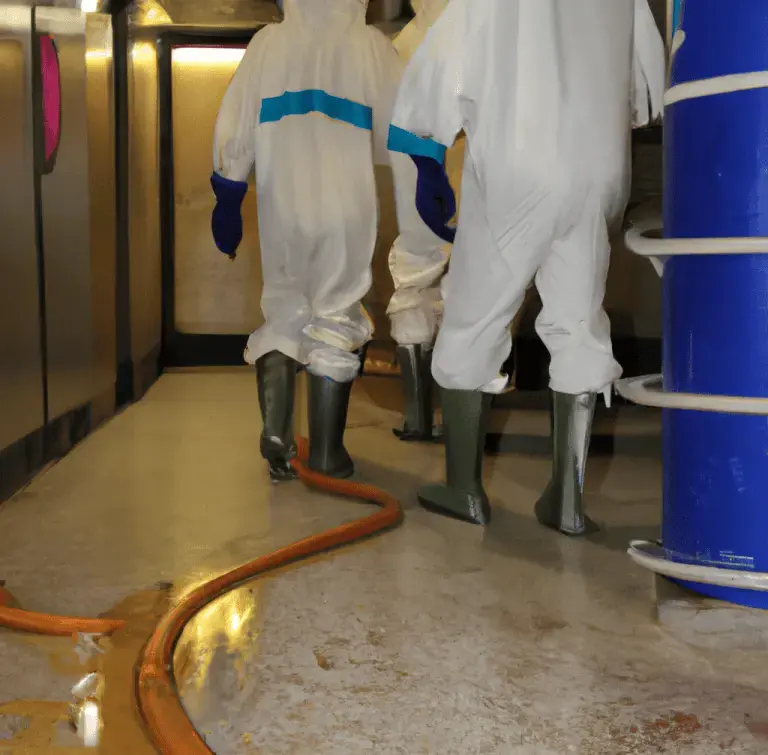
Sewage backup cleanup in Pinellas Park is done in protective gear, with the affected area sealed off from the rest of the home.
What gets removed
- Carpet and pad that sewage touched, since they cannot be made safe again.
- Drywall and insulation that wicked sewage water above the floor.
- Soaked cabinets and furniture made of particleboard or upholstery.
What gets cleaned
Concrete, tile and solid wood are scrubbed, treated with an antimicrobial and dried. Air scrubbers can keep airborne particles down during the work.
First steps for a household
A backup is not a job for towels and household cleaner. The first steps are about stopping the water and protecting people, and the pipes are a plumber's job.
Whether the blockage sits in the house drain or farther out is for a plumber and the utility to sort out, and the cleanup does not have to wait for that answer.
- Stop flushing and stop running sinks, showers and washers, because every gallon adds to the backup.
- Keep children, pets and anyone with a weak immune system out of the area.
- Skip the household wet vacuum, since it spreads contamination into the air.
- Photograph the affected rooms and the height the sewage reached on walls before cleanup.
- Leave the power off in any room where sewage reached outlets or cords.
Drying and sanitizing the structure
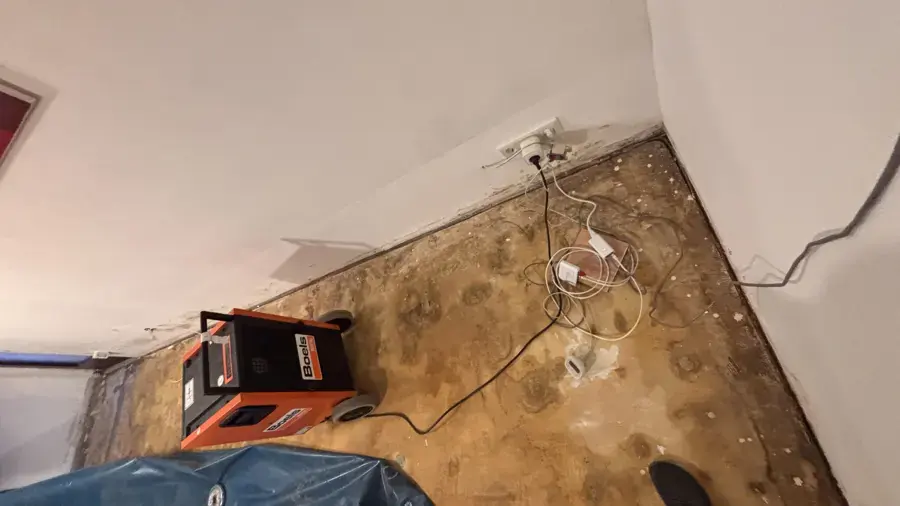
After the sewage and ruined materials are out, the structure is cleaned, treated and dried. The drying team sets air movers and dehumidifiers and logs moisture readings until framing and subfloor reach the dry goal.
Structural drying in Pinellas Park matters even after the surfaces look clean, since damp framing can grow mold within 24 to 48 hours.
A sewage job is finished when the surfaces are clean, the odor is gone and the readings are at the dry goal. The photos and the daily log record each step.
Records and questions for the insurer
Backup coverage is often an optional endorsement on a homeowners policy, so the policy wording decides whether a sewage loss is paid. Dated photos, the removal list and the daily moisture log give the insurer a clear record.
Patch reported in March 2022 that Congress had approved $700,000 for a sanitary sewer interceptor in Pinellas Park to prevent a repeated raw sewage overflow in rainy weather. The first funding covered design of a larger force main on Belcher Road.
Public projects take time, and a home's own cleanup cannot wait for them. For the wider picture, see water damage restoration in Pinellas Park.
Sewage jobs in Seminole follow the same Category 3 steps, as with sewage backup cleanup in Seminole.
Questions
Is a sewage backup the same as a clogged drain?
No. A clog usually affects one fixture and clears with a plumber's tool. A backup affects the lowest drains in the house, can bring wastewater indoors and calls for Category 3 cleanup.
Can sewage damage be cleaned with household products?
Household cleaners do not make sewage-soaked materials safe. Porous materials are removed, and hard surfaces are cleaned and treated with an antimicrobial product.
What did the August 2024 overflow involve?
WUSF reported that after Debby's downpours 30,000 gallons of wastewater overflowed in Pinellas Park, 7,000 gallons were recovered and the flow went into storm drains leading to the Cross Bayou Canal.
Does the city treat wastewater itself?
The city says its lift stations send wastewater to regional treatment plants in St. Petersburg and Pinellas County.
How long does the drying phase last?
It lasts until moisture readings in framing and subfloor reach the dry goal. That depends on how far the water spread, not on a fixed schedule.
Which rain events put Pinellas Park on flood advisories in 2026?
Tampa Bay Times articles on National Weather Service flood advisories listed Pinellas Park among the locations affected on May 18, July 17, August 30 and September 8, 2026.
Should a household with repeated backups tell the city?
It can. The city's Sewer Division maintains the lift stations and collects the wastewater, and a plumber can check whether the house drain is the problem.
What does Category 3 mean for a sewage backup?
Category 3 is the IICRC S500 category for grossly contaminated water, which includes raw sewage. Porous materials that absorbed it are removed, and the structure is cleaned, treated and dried.