Manufactured Home Water Damage in Treasure Island, FL
Floors, belly insulation and lighter decking in a manufactured home dry differently from site-built construction. The drying team handles water in them on Treasure Island 24/7, matching the method to each home.
(888) 621-2041Ask about a Treasure Island mobile home floor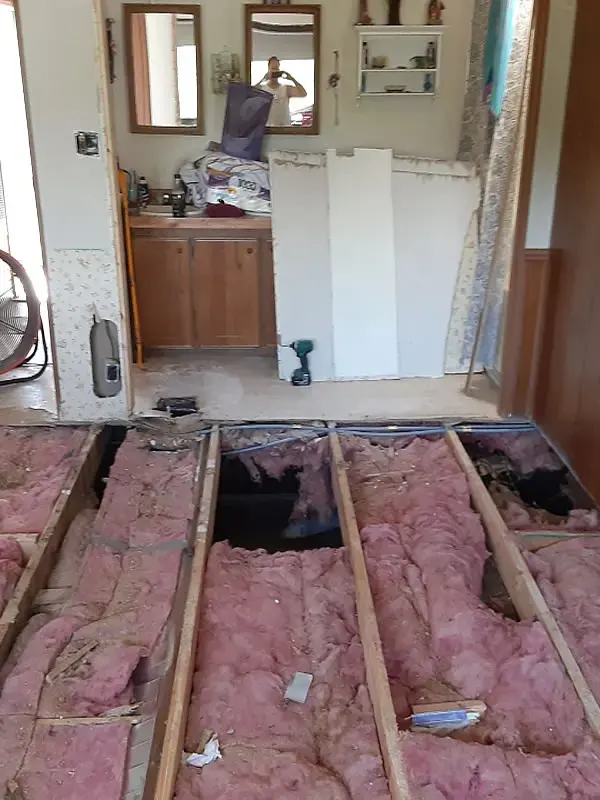
Step by step: manufactured home water damage in Treasure Island, FL
Find the wet layers
Meters and a thermal camera check floor, decking, belly insulation and wall bottoms.
Open and remove
Soaked insulation comes out, and swollen or softened decking is cut for replacement.
Dry what is sound
Mats, air movers and LGR units dry framing and decking that can be saved.
Verify and rebuild
Readings are checked against a dry reference before insulation goes back.
First moves for manufactured home water damage in Treasure Island
- Shut off the water
Close the main valve or fixture valve, and switch off the water heater if it is the source.
- Stay off soft floors
Wet decking can sag, so avoid heavy furniture and long periods standing on spongy spots.
- Lift contents
Move rugs, boxes and small furniture off wet flooring.
- Photograph first
Photograph stains, soft spots and any water under cabinets and fixtures.
- Call for drying
The extraction crew works 24/7 on floors, bellies and walls.
What does manufactured home water damage cost in Treasure Island, FL?
A wet room with soaked insulation and a damp subfloor often runs $2,000 to $5,000. Replacing decking under a bath or kitchen, or drying the whole belly, costs much more.
One room's insulation and decking
- Soaked insulation pulled
- Decking dried in place
- Daily readings
A bath or kitchen floor
- Swollen decking replaced
- Toilet or tub reset
- Moisture map of the floor
Floor and belly across the home
- Belly insulation replaced
- Several rooms of decking
- Claim documentation
Each figure is a typical range, not a quote. Water category, wet square footage, material class and how soon drying began move the final number. The water damage cost calculator narrows it for your own loss.
A manufactured home is built differently from a site-built house, with a lighter floor system, decking over joists and insulation tucked under the floor. Water that gets in tends to linger in those layers instead of draining away. Manufactured homes are uncommon on the island, so each one gets a method matched to its floor system.
How these floors take on water
Water usually enters in one of these ways:
- A failed supply hose or fitting under a sink
- A leaking water heater or washer connection
- Roof or window leaks that run down inside the walls
- A cracked drain pan or condensate overflow from the air handler
Because the floor is a thin sandwich of finish, decking and insulation, water can travel under the flooring and reach rooms far from the source.
Belly insulation and subfloor decking
The belly is the layer under the floor that holds insulation and often ductwork. When it gets wet it sags and holds water against the decking, so the mitigation team opens the belly wrap where readings are high and removes insulation that is soaked.
Decking made of pressed wood swells and weakens when it stays wet. It is checked by feel and by meter, dried when it is sound and replaced when it has swollen or softened.
Drying without tearing out more than needed
The aim is to save what can dry and replace only what cannot. Drying mats lift moisture out of floors, air movers push air through openings, and LGR dehumidifiers pull water out of the home. Fixtures such as a toilet or tub are pulled and reset only if the decking beneath them is wet.
Wet insulation under the floor is replaced only after the belly wrap and decking above it read dry.
Trade fact: Pressed-wood decking that has swelled does not shrink back, so it is judged by its firmness and readings, not by how dry the surface looks.
Paperwork and the next steps
A manufactured home policy may be written differently from a site-built one, so keep dated photos, readings and receipts together. Your insurer can say how the loss is handled, and the response team supplies the drying records.
Manufactured Home Water Damage questions in Treasure Island, FL
Are manufactured homes common on Treasure Island?
No. An estimated 47 of the island's 6,192 housing units are mobile homes, under 1%, so the work is uncommon here and the method is matched to each home.
Why does the floor feel soft after a leak?
Pressed-wood decking swells when it stays wet and loses strength. A soft spot means the decking has absorbed water and may need replacing even if the surface looks fine.
Does the belly under the home need to be opened?
Often yes when the leak was under a sink, tub or water heater. The belly wrap is opened only where readings run high, and soaked insulation is replaced afterward.
Can a toilet or tub stay in place during drying?
Only if the decking beneath it reads dry. When it does not, the fixture is pulled and reset after the floor is dried or replaced.
How long does a manufactured home floor take to dry?
Often several days. Soaked decking that is replaced adds repair time, and the drying time estimator shows a rough range.
What records help an insurance claim?
Dated photos, moisture readings, a list of removed materials and drying logs. The cost calculator gives a first range to discuss with the insurer.
Manufactured home water damage across Treasure Island, FL
Manufactured home drying is available across Treasure Island, from Isle of Capri and Isle of Palms to Paradise Island and Sunset Beach, along Gulf Boulevard, in ZIP 33706, with the method matched to each home.
The same service nearby: manufactured home water damage in Seminole, South Pasadena, Kenneth City.
Soft floor or wet belly insulation?
The restoration team works 24/7 on manufactured homes, drying floors and bellies and keeping photos and readings for the claim.