Manufactured Home Water Damage in South Pasadena, FL
Water in a manufactured home hides in the belly insulation and the floor decking beneath the flooring. The response team opens the floor, checks board by board and dries what can be saved.
(888) 621-2041Ask about mobile home water damage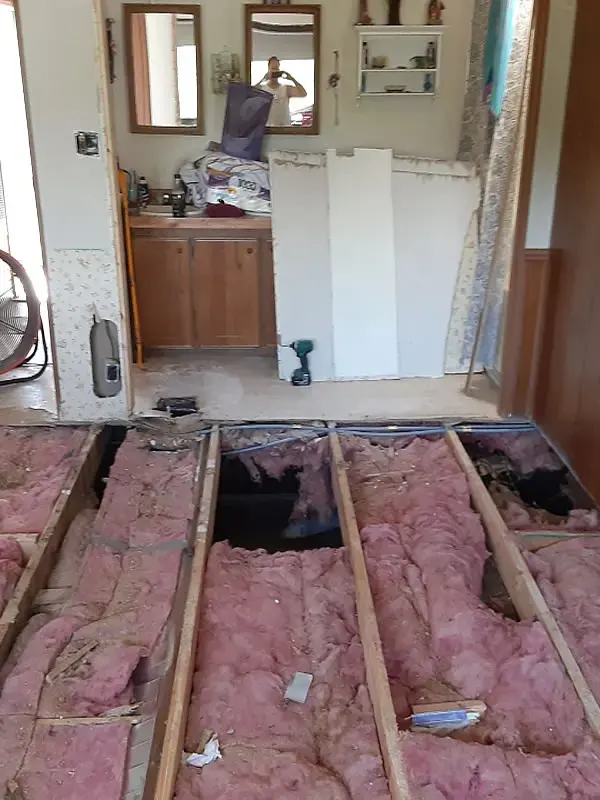
Step by step: manufactured home water damage in South Pasadena, FL
Probe and map
Meters and a probe mark where the decking and belly insulation are wet.
Open the floor
Flooring comes up where readings are high and wet insulation is removed.
Dry or replace
Salvageable decking is dried, while swollen sections are replaced.
Verify the dry goal
Daily readings continue until joists and decking reach dry targets.
First moves for manufactured home water damage in South Pasadena
- Stop the water
Close the shutoff at the fixture or the home's main valve.
- Stay off soft spots
Keep weight off any spongy floor area until it is checked.
- Dry what is reachable
Soak up surface water and lift rugs, but leave flooring in place.
- Record the damage
Photograph wet flooring, fixtures and any stains on the walls.
- Call for a floor check
Dispatch runs 24/7, and the floor is probed before anything is removed.
What does manufactured home water damage cost in South Pasadena, FL?
One room with wet insulation costs $2,000 to $5,000, a replaced bath or kitchen floor $4,000 to $9,000, and damage across the whole home $8,000 to $18,000+.
One room, wet insulation
- Insulation removed
- Joists and decking dried
- Daily readings
Bath or kitchen floor replaced
- Swollen decking replaced
- Fixtures pulled and reset
- Moisture map kept
Belly and floor across the home
- Large-area insulation removal
- Decking in several rooms
- Claim records
Each figure is a typical range, not a quote. Water category, wet square footage, material class and how soon drying began move the final number. The water damage cost calculator narrows it for your own loss.
A manufactured home is built in layers. Flooring, decking, joists and belly insulation sit close together, so water that gets through the surface spreads sideways and downward quickly. The mitigation team checks each layer rather than judging from the floor alone.
What the floor layers hide
A wet manufactured home floor usually involves several layers:
- Vinyl or carpet that looks only slightly damp
- Decking that swells, softens or loses its grip on fasteners
- Insulation in the belly that holds water below the joists
- Wall bottoms where water wicks into the paneling
A soft spot underfoot or a floor that flexes is a sign that the decking has absorbed water, even when the surface has dried.
Water that enters at a tub, a toilet or a washer connection tends to travel along the joists, so the wet area is usually longer than the visible stain.
Mobile homes in South Pasadena
The American Community Survey counts 398 mobile homes here, about 8.0% of housing units. Pinellas County named all mobile homes in its evacuation orders before Hurricane Helene and again before Hurricane Milton, and water damage in these homes can follow a storm or a plumbing failure.
Opening the floor
The tech who does the walkthrough lifts the flooring where readings are high, checks the decking with a meter and probes for softness, and cuts away wet belly insulation from below or above as access allows. Swollen decking is replaced rather than dried because it rarely regains its strength.
Trade fact: decking that has swollen and softened will not hold fasteners again, so a floor that feels spongy after drying usually still needs sections replaced.
Bath, kitchen and fixtures
Bathrooms and kitchens are the usual sources, and their fixtures sit on the same decking that took the water. Toilets, tubs and sinks may need to be pulled and reset so the floor beneath can be dried and repaired.
Drying equipment and records
Air movers and dehumidifiers dry the cavity below the floor, and daily readings show when the decking and joists reach a dry reference. The drying time estimator and structural drying and dehumidification show what to expect.
The records matter for the claim, so the team photographs the open floor, the removed insulation and any replaced decking with the readings beside them.
Manufactured Home Water Damage questions in South Pasadena, FL
Why does a manufactured home floor feel soft after a leak?
The decking absorbs water and swells, which loosens its hold on fasteners and makes the floor feel spongy. A meter and a probe find soft sections before anything is cut.
Does the belly insulation always come out?
Wet belly insulation is removed because it holds water against the joists and decking. Dry sections can often stay, and the readings decide where the cut stops.
Do evacuation orders change the cleanup?
They change the timing, not the method. The county's orders named all mobile homes before Hurricane Helene and Hurricane Milton, so a returning owner may find a soaked floor, and the same drying steps apply.
Can a bathroom leak damage the whole floor?
It can, because water moves along the decking and into the belly. A leak at the tub or toilet is mapped across the whole floor before the repair area is decided.
How long does a manufactured home take to dry?
The length depends on how much decking and insulation stayed wet and on the humidity, so the plan follows daily readings. The drying time estimator gives a rough range.
Are fixtures removed during drying?
Sometimes. Toilets, tubs and sinks are pulled and reset when the decking beneath them is wet, so the floor can be dried and repaired properly.
Manufactured home water damage across South Pasadena, FL
Manufactured home calls are accepted anywhere in South Pasadena, ZIP 33707, and the floor is opened only where the readings call for it, with the rest of the home protected.
The same service nearby: manufactured home water damage in Seminole, Treasure Island, Kenneth City.
Dry the belly, save the floor
The floor is opened where the readings call for it, wet insulation comes out and the decking is dried or replaced, all recorded for the claim.